

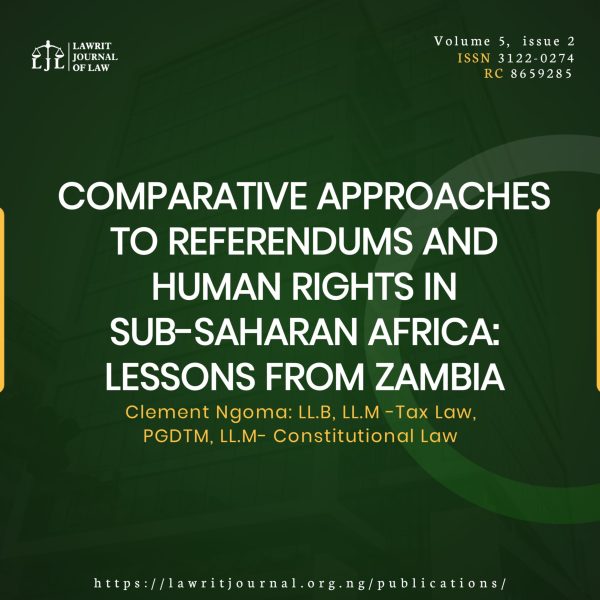
In the sub-Saharan African region, referendums tend to be pivotal events in constitutional development. They hold out the prospect of greater human rights protections while revealing fundamental tensions between democratic aspirations of the people and vested power interests of the political elite. This article examines the 2016 constitutional referendum in Zambia which sought to amend the Bill of Rights amidst a contested electoral process. It draws comparative lessons from the referendum of Kenya in 2010 and the referendum of Uganda in 2000 on multiparty democracy. From these cases, it explores how referendums can advance civil liberties such as the freedom of assembly and freedom of expression or backslide against them through low turnout of voters, manipulation by the political elite and inadequate civic education of citizens. The lessons drawn from Zambia underscore the need for an inclusive process to ensure legitimacy of the constitution. This highlights the broader African challenge of balancing direct democracy and the substantive advances of human rights and civil liberties. The analysis suggests that while referendums offer pathways towards empowerment, there success centres on robust institutional safeguards and genuine public participation.
June 5, 2026